| |
|
 |
Welcome to our Healthy Lifestyles Page
Articles are added regularly...so check back often!:)
|
 |
Articles
Survival in the 21st Century
Dandelion Magic
The Day-lily Nature's Forgotten Food
Discovering Nature's Balance Within Ourselves
The Way of the Coyote
The Realities of Wilderness Survival - Part I
The Realities of Wilderness Survival - Part II
Take Charge of Your Health - Junebug's Flu Remedy
Wild Edible Plant Recipes
Stacey's Wild Wisdom - Lamb's Quarters
Stacey's Wild Wisdom - The Wild and Wonderful Plants of Summer!
Rites of Passage - Empowerment for the Teenage Soul
Chickweed & Garlic Mustard / A Perfect Pair
The Winter Solstice - A Time for Exploration and Fun!
|
Welcome everyone...
This section of my web site dedicated to providing people with valuable resources and information to enhance our physical, spiritual and emotional lives. My Vision for Earth School is to support and encourage students to live a complete and holistic lifestyle. I believe that the result of this lifestyle is a heightened Awareness that fosters a natural relationship with the Earth and all its inhabitants. I believe that this relationship is necessary to ensure that we respect and protect our environment for our grandchildren and generations yet to come. Our Ancestors knew this Wisdom instinctually. Their Wisdom is still here to guide us, but we must ask for it... actively seek it and remember to always be thankful...." Always walk in beauty."
So sit back, relax and enjoy. Remember... "There are always Healthy Alternatives available for us, no matter what we face in our lives." .....
Respectfully,
Richard Cleveland
Founder & Director
**Disclaimer...."We make no claims whatsoever about the scientific validity or legality in regard to the content of these articles and documents posted here. We prescribe or suggest nothing. It is up to YOU to find the truth for yourself. We accept NO responsibility for YOUR actions."
|
A Word About Survival in the 21st Century... by Richard Cleveland
Ask ten people what the word survival means to them, and you're liable to hear ten completely different answers. Some would say survival is you against nature in a desperate, debilitating struggle to make it out of the woods alive. Others would conjure up images of anti-government extremists organizing militias, burying grain and ammunition, waiting for a major catastrophe or global war. The majority would be somewhere in the middle. A few might even define survival as an entertaining show on TV. Maybe one out of ten people would think survival is pretty cool, and that knowing how to live off the land would be a good thing.
My introduction to survival training came 28 years ago when I signed up for a week-long program at Tom Brown Jr's Wilderness Survival School in New Jersey . After reading several of his books, I took the plunge. I went with the intention of learning how to track animals so I could become a better deer hunter. As a child, I was one of those nerdy kids who caught butterflies, and basically everything else that moved, just so I could take a closer look. Nature fascinated me, and I read everything I could get my hands on about animals and insects. In a nutshell, I thought I knew a lot about Nature before I even went to Toms introductory class. Little did I know, my world was about to be turned upside down. In one week this man showed me that I didn't know anything about Nature, and what I had learned was superficial at best. I was missing over 90% of what was there to be seen and experienced, walking right past it all. Emotionally, I was crushed. I thought I knew Nature! "Why had I been missing so much?" ... It was because no one had ever taught me the skills to be "Aware." School certainly hadn't taught me such things. After all, now that we'd become a civilized society, I didn't need to have that knowledge anymore, right?
So many unanswered questions swirled through my head...
In that week, I learned how to make fire by friction, build a shelter (one that would actually work) and purify water. In addition, I learned animal tracking, amazing Nature awareness skills, how to identify wild plants for food and medicine, how to procure fish and game in the wilderness and so much more.
At this point, some of you might be asking. Why in the world would anyone need or want to learn survival skills? After all, everything we need, we can buy.right? Maybe you're right. I would ask all of you however."Why wouldn't you want to learn these skills?" Our ancestors all knew these skills and without that knowledge it's doubtful that we'd be here today. "When did our relationship with Nature and our learning how to be self-reliant go out of style and become so unimportant?" It's obvious to see how this disconnection has impacted the environment and ourselves. With so many people in the world today, perhaps we need these skills now, more than ever. Survival teaches you the difference between your needs and your wants. Nature is a powerful teacher, when you open your heart to it. For me, it's all about learning to live in balance with the Earth.
My journey over the past 20 years has taken me far. What started as a curiosity has changed my life. Learning survival skills has deepened my relationship with Nature and has made me a better person. It has introduced me to a growing network of people who have dedicated their lives to sharing the gifts of Nature with others. Though I teach, I'm still learning, still a student. There is so much to learn and experience in this lifetime. Tom Brown re-introduced me to my child within, which is so full of wonder and curiosity...I will never forget.
So remember, survival need not be a scary word. "Survival is your birthright." Knowing how to take care of yourself and live in balance with the Earth is empowering. Survival skills can change your life and the choices you make on a daily basis. As a result, these choices can have a positive impact on the environment and leave the World a better place for generations yet to come. Isn't that what it's all about?
When you know the skills, "Survival" becomes a word of comfort.
To Top |
| |
Dandelion Magic:
"Below is a touching and powerful story about a friend of mine who contracted Cancer several years ago. Because of fate or divine intervention... it really doesn't matter, he is now Cancer free. This is actually three articles, but well worth the read".... ~Richard
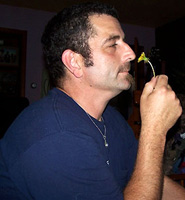
Hi, my name is Carl and I have been a musician and friend of Victor Wooten for many years.
Six years ago, I was diagnosed with advanced type-3 throat cancer. Even though it has a lower success rate, I decided to undergo radiation treatment rather than disfiguring surgery or debilitating chemotherapy. One of my neighbors told me about a 85-year-old farmer named George who cured his prostrate cancer with dandelion root powder. George was told by doctors he had maybe six months to live. I met with George and he told me that God inspired him to use the dandelion root powder. In thanks to God for saving his life he makes dandelion root powder to give away for free to all who need help. He helps hundreds of people some who were told they had no chance & were going to die within months, most of them are alive and well today .George is now 90 and its been 11 years since his diagnosis.
He gave me some and I started to take it along with my radiation treatments. The next 12 weeks were the hardest in my life, I lost over 60 lbs; it was very painful to swallow but I continued taking the dandelion root powder.
Now I am cancer free and feeling stronger than I ever have. I continue to take the dandelion root powder and I have told 2 friends about it that had cancer. They are both healthy now. I grow dandelions in my garden without any chemicals, fertilizers or pesticides added. In the fall I dig them up trying to get as deep as possible to obtain the whole root. I brush off some of the dirt but I do not
wash them, George stressed this when he told me how to do prepare the dandelions. I dry them at 95 degrees in a food dehydrator for about 5 days until they are brittle. Then I break them up and put them in a blender to grind to a fine powder and take 1/2 of a teaspoon daily. The powder can be kept for years if stored in an airtight container. I am living proof that nature can help heal cancer. If you have any questions or need more information feel free to contact me.
Carl Waters
peace4now@att.net
To Top
HOW THE LORD TOLD ME TO CURE CANCER: By George Cairns
(Please save this page, as it won't be printed again by me. It may save your life or the life of a loved one or a friend. Anyone may reprint this if they print it word for word.) G.C.
Every week around 10,000 people die of cancer. Government figures show the death rate for cancer deaths has not changed in the last 10 years. Chemo and radiation only save around 10% of the people treated. So this shows our doctors don't have much to work with. As this article goes on, I will explain how God told me how to cure my cancer of prostate and colon cancer. Also, I will explain how to prepare this plant and how much to take. There is nothing to buy. For some reason, the Lord has picked me to carry these words to our. I am only the delivery boy, and none of this is my idea. I do believe every work I writ here and I'm living proof it works. The cost of printing is my thanks to God for giving me back my life and health.
A little over three years ago I was about done in with cancer. One morning as I was waking up and hoping the end would come soon, a voice came to me and said, “You have to do something about your prostate cancer. Take the root of the dandelion. Don't expect a miracle. It took you a long time to get in this condition.” Then the voice was gone, I thought the voice was kidding to use the dandelion. When this voice tells you to do something, you, you do it. You must do it, like writing this article. It is the last thing I ever expected to do. Then I thought he didn't tell me how much to take or how to prepare it. As soon as you could blink an eye, I know how much to take, how to prepare it and it would take 4 to 6 months to cure me. I also knew I wasn't to make a penny on it.
As soon as I got around that morning, I dug some roots and started to prepare it. About a week later I started taking it. Three weeks later the pain in my back and side was gone and my bowels had improved. Five and one half months later they could find no cancer problem in me at all.
I then wanted to find someone else to try it, and that was the biggest problem yet. Nobody seemed to want to help. When I told doctors they just smiled as if I were nuts. Finally I was telling a friend about it and he said he had a friend that was dying of lung cancer. He had it in both lungs and was bed ridden. They were tapping his lungs. He had been given 4 to 6 weeks to live. After he had been on this powder about 6 weeks, he was up and around doing his chores and driving his car. He went to his doctor's office and the doctor couldn't believe it. He took him to the hospital and gave him a CAT scan. He found no cancer lesions in his lungs and said it was a miracle. I then put and ad in The Northwest Herald offering it free and four people said they would try it. Slowly one person told another and it spread. There was a fair amount of people taking it for different kinds of cancer and several for other things. For instance, a man lost the use of his immune system and was told he wouldn't be able to work again for three years. In six months he is now working ½ days and feeling better. I know this is not a cure-all. It won't help everyone or all kinds of cancer. I know it is not a cure for skin cancer and it hasn't had much luck with brain tumors. There is a doctor in Boston , Massachusetts that has developed a vaccine that is doing great things. This has been successful with prostate, colon, breast, liver and best of all with lung cancer. Five people have taken it for lung cancer and all five have been cured once. The immune system controls the cancer cells in your body. As long as the immune is healthy, you don't usually have a cancer problem. When your immune system gets run down, it loses control of the cancer cells, and they start eating live cells and this is what they call cancer. This powder made from the dandelion root has something in it that builds up the blood and the immune system.
When the immune system is built up so far, it gets back control of cancer cells, and they do an about face and start cleaning up the mess they've made. This is why you must have a fair appetite because you body must build itself up and be healthy if your immune system is going to be strong. This will not work for people have lost their appetite are on strong Chemo. Doctors try to blast the cancer out of you body with Chemo or radiation. By doing so, it destroys your immune system and appetite. These are the most important things your body needs to beat cancer. Operations also knock the immune system haywire. That is why so many people that have operations for cancer find a short time later it has spread somewhere else.
Many of the worst diseases that have plagued the world have been cured quite easily. When I was a boy, women dreaded the goiter more than cancer. A little iodine in the diet cured that. For hundreds of years the most dreaded disease was leprosy and lockjaw. A doctor found he could produce penicillin from moldy bread and could cure them and many more things. How long has moldy bread been around? I'm sure scientists will find many uses for the powder made from the root of the dandelions besides cancer; I have already found it builds up the blood so you heal much faster.
To make the powder from the dandelion root you must follow my directions to the letter. Any change and it won't work. Dig a handful of dandelion roots any time of the year – it doesn't matter. Cut the leaves off just below the crown. DO NOT WASH . Then they must be dried around 100 degrees. I do it in an incubator with no water. You can also dry them under a heat light bulb that you raise or lower it so it's 100 degrees. You can also use the sun or in the attic if it's not too hot. It takes about 5 or 6 days in the incubator. I haven't done this all the way under the heat light. When you break a root and it snaps, it is ready to powder. Take an old iron frying pan and a clean hammer. Take one root at a time and place in the frying pan and start tapping. Don't hit it hard or it will fly all over the place. I put my hand around the root to keep most of it in the pan. If it sticks to the hammer and pan and doesn't crumble in your fingers, it isn't dry enough. Keep it up until you have enough to start. It takes about 20 minutes to ½ hour to prepare enough for a week. When you get used to it you can go much faster.
I have an old vessel that druggist used to pound pills, this goes much faster. DO NOT USE AN ELECTRIC GRINDER, it won't work if you do. You lose too much of the good part in the dust. You must do it as I have said or don't do it at all. I've tried shortcuts, but it seemed someone was looking over my shoulder and I know when I make a mistake. I'm just an old farmer and not a scientist, so I wouldn't know the correct amount to take on my own. Now take a little over ½ teaspoon once a day at any time and mix it with water, orange juice, etc. Do not use in soft drinks, liquor, or anything hot. When mixed, use all. Don't let it stand around. Keep the powder in a dry place, after taking it three or four days, you will feel good, but nothing else. That is because your blood is building up. When your blood is happy, you're happy. In most cases, this will build your immune system in from three days to three weeks to the point it takes back control of your cancer cells and thus the cancer stops spreading, in most cases it is going to help. There is no body feeling as it works. You just feel a little better each week. After three weeks most of the pain will be gone in your back and you'll know it's working if you had pain there like I did. If you have bone cancer in the spine, it will take three months to work. This is not an overnight cure. It took a while to get in this condition and it will take a while for your body to heal. The sooner you start, the quicker you will be over cancer. Young people heal faster than old people, but it will help at any age. I know because I'm 80 and have been taking it for over three years. No cancer has come back and no side effects except when my body has had enough, it lets me know by getting heartburn. Then I back off some. Some people get stomachaches when they need less. It also means your cancer is under control and you don't need as much. You will also find you probably won't catch a cold while you are taking it full strength.
The biggest enemy for this root is Chemo. The stronger the Chemo, the less chance the powder has to help you as Chemo tears your immune system and appetite down, two of the most important things you need to cure cancer. There is only a ten percent chance Chemo will cure you. With no Chemo, your chances are from 75 to 80% but you must take it every day. Don't let your doctor give you that old threat if you turn him down that goes ‘If you want to throw your life away, I can't stop you'. Just remember that 90% of the people that take his advice and take Chemo are in the cemetery. Don't blame the doctor, he is doing his best with what he has to work with or you could ask for a written guarantee.
I have only mentioned cancers that I know people have had and used this root. It should help pancreas cancer if taken before the appetite is gone and most body cancer. This is a food, not a drug. It shouldn't interfere with medicine your doctor may be giving you. Only two doctors have told patients to keep taking the powder when they have made a miracle recovery. The rest of the doctors have run the powder down and blasted the people even if the cancer has disappeared. The medical world is not going to accept this easily.
Going back to not washing the roots and leaving a little soil on them. It is for your own good. A good bit of immunity comes from the soil. It starts as soon as you are born. Your fingers touch something and you put them in your mouth. A little dirt at first, and more as your grow older and start crawling. Then everything you touch goes in the mouth. When children go outside to play and when they come in, they are the dirtiest around the mouth and hand. The hands go in their mouths no matter how dirty they are. Many diseases and bacteria live in the ground, but they don't seem to cause any trouble but it does build up the immune system. Some animals can't live if they don't eat a certain amount of soil if you read this article over, you will see it all goes back to common sense. I wish all of you people with cancer or other problems the best.
George Cairns 708 Hughes Road , Woodstock , IL 60098
The dandelion root powder you can buy at a Health Food Store is not made the same way. It is not known to help cancer.
To Top
HOW TO MAKE DANDELION ROOT POWDER: By George Cairns
To make dandelion root powder, let's start at the beginning. This would be collecting the seed. The seed is at the base of the white fluffy crown that appears when the yellow flower matures. Blow on them and they fly away. These little seeds do not grow until the next spring. I collect the seeds in May and June, then I put them in the freezer. This way you fool Mother Nature, as the seeds must freeze before they grow. This way you can grow the seed the same year you collect then. Work up the land where you are going to plant them and spread the seeds on top of the ground and rake them in very lightly and water. I usually plant the seeds in August.
I dig up the seedlings the next April. I try to do all my transplanting in April as by the end of April they start blooming, which takes the energy away from making roots. It's a good thing to pick the buds off for the first couple months. When I did the seedlings up in April, I plant them about 6 inches apart in rows 18 to 20 inches apart. I hoe them when needed and keep the weeds and grass out of them. After about 2 months you won't be able to hoe as they will cover the ground. Then I pull the weeds and grass out of the bed. Water when needed.
I usually start digging them up in October. By this time some of the roots will be 1 inch in diameter. I shake off most of the dirt and slice lengthwise the bigger roots to about ¼ inch so they will dry evenly. To dry them I use a forced-air incubator without any water in it. I set the incubator at 100 degrees or a little less. It takes about 5 days until they are ready to grind. You can use a dehydrator, set around 100 degrees. If it doesn't have setting, don't use it. You can also dry in the sun if you put them in something the wind can blow through, life a small potato or onion sack. Hang them in the sun but take them down in late afternoon and put in a plastic sack and tie it. If you don't they will pick up moisture and you will be back where you started. Then put them out the next day when the sun in up. Once you have heat in the house, it's no trouble, as they will dry OK most anywhere there is heat, like near a register or stove. The excess dirt will pop off as they dry. Mother Nature knows how much to leave. If the roots are very clean, add a little dirt, as this powder won't work without the dirt.
When you make powder, try not to lose anything. Pound the roots flat, then put in an electric coffee grinder for 25 seconds and you have powder. You can also keep pounding and crumbling until you have it the right fineness. What I did for a long time, a friend gave me a cast iron pestle and mortar. With this you can get it down as fine as you wish.
To store, put in an airtight jar and fill as near to the top as possible. I've kept it 10 months this way. Also, keep in a dry place.
If you have any questions, write to:
George Cairns
708 South Hughes Road
Woodstock , IL 60098
To Top |
The Day-lily - Nature's Forgotten Food
By Richard Cleveland
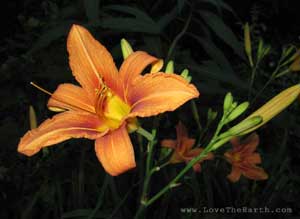
Last week I covered one of many nutritious wild plants, the dandelion. There are so many edibles currently available that it’s hard to choose with one to cover next! Last weekend I ran a four day Wild Edible & Medicinal plant intensive (Spring session). Ten adventurous souls were in attendance and eager to learn about and experience Natures bounty.
Our salad consisted of violet leaves, lambs-quarters, dandelion, wild garlic, ox-eye daisy, sheep sorrel and poor-mans pepper. Some reserved wild garlic, dandelion and lambs-quarters found their way into our stir-fry accompanied by plantain, burdock root, thistle, daylily tubers and bamboo shoots. A cooked green of wood nettle provided some variety as well as a nutritious tea to wash it all down. For good measure we also made fresh sassafras root tea which went well with our clover fritters (drizzled with honey) for dessert! YUM! Are you hungry yet?:))
Seriously, all of these plants and many more are currently available and FREE for the picking, literally. As the economic picture continues to look bleak, I’m surprised that these plants continue to receive little attention. Maybe it’s ignorance or fear that keeps them off our dinner plates, or perhaps a combination of both. I think too often people associate eating weeds with poverty, though nothing could be further from the truth. Their abundance and nutritive value should definitely be more mainstream, especially considering the fact that 50 million Americans are currently on food stamps.
The day-lily (Hemerocallis fulva) is one of those plants that goes almost entirely ignored. It provides an abundant source of food almost year-round. While technically labeled a “garden escapee,” it has found a home among its wild neighbors. It’s blooming everywhere here in western North Carolina and I suspect it’s near most of you as well. Positive ID, while not difficult, is a must here. Some people confuse Irises (poisonous) with day-lilies, but the leaves are entirely different. Day-lily leaves are folded and the sword-like leaves of Irises are not. It’s pretty simple really, but always err on the side of caution when in doubt.
The young shoots, flower buds, tubers and flowers are all edible, but need to be prepared properly. Many, like myself, find the uncooked flower buds and raw tubers a bit irritating to the throat. Don’t let this deter you however, as cooking removes this completely and easily. The young shoots pop up early in the Spring and can be eaten raw, but I recommend trying a few small bites first to make sure they’re agreeable to you. The root system is quite extensive and boasts numerous tubers (swellings) that when cooked are reminiscent of small potatoes. I find Spring and Fall to be the best time to gather these. I either throw them into stir-fry’s or steam them until thoroughly cooked. Soups are another good option here. The numerous unopened flower buds can be prepared the same way. Fresh flowers can be added to salads, soups or made into fritters. Like any wild edibles, you should eat small amounts first to see how your body handles it. Too many day-lilies can invoke a cleansing reaction in the form of loose bowels, so don’t overdo it unless this what you seek:))
Each year I add to my knowledge of wild foods and can honestly say that it’s had a huge impact on my health and overall well-being. There is something primal about eating from the wilds, something difficult to put into words. I’m fairly certain I’m slowly turning feral however:)) The following quote is one of my favorites…
"One of our greatest fears is to eat the wildness of the world. If we eat the wild, it begins to work inside us, altering us, changing us. Soon, if we eat too much, we will no longer fit the suit that has been made for us. Our hair will begin to grow long and ragged. Our gait and how we hold our body will change. A wild light begins to gleam in our eyes. Our words start to sound strange, non-linear, emotional. Unpractical. Poetic. Once we have tasted this wildness, we begin to hunger for a food long denied us, and the more we eat of it, the more we will awaken."
~Stephen Buhner
To Top |
Discovering Nature's Balance Within Ourselves
By Richard Cleveland
Not very long ago there were people living close to the Earth, honoring, celebrating and respecting life through prayer and beautiful ceremonies. These people understood nature’s many gifts. All their food, clothing, medicine, tools and materials for their homes came from their immediate surroundings. Understanding the natural world was critical for their survival. The Earth was Sacred to them. Who were these people? Our ancestors…that’s right, all our ancestors knew how to live off the land… or perhaps, to live with the land would be more accurate. There was no air pollution, no water pollution, no litter, and there were no garbage dumps. They lived in balance with the land.
By contrast, in our high-tech fast-paced world today, it’s easy to see how we are gradually distancing ourselves from the natural world. Nature, for the most part, is viewed as merely a commodity to be used and used up anyway we see fit. And, most of our experiences with nature today come in the form of outdoor recreation. Many of us spend that time racing around the woods and waters on various machines doing Mach 3 with our hair on fire. Sadly, going on a nature walk or fishing on a quiet riverbank somewhere is considered boring to most people.
Nature was created perfectly. Our job is to perceive it, not to try to control it. The natural world is amazing and very complex. We are merely a strand in this beautiful web of life. Our ancestors understood this delicate balance and went to great lengths not to upset it. Perhaps the foundation of their wisdom was that, they didn’t consider themselves to be more important than nature. They were grateful just to be a part of it. The result of their knowledge was that they were self-sufficient. In other words… they could take care of themselves! Unfortunately today, most people want to be taken care of. We have much to learn from the relationship our ancestors had with the Earth. There’s an old saying: “Give a man a fish and you feed him for a day... Teach a man how to fish, and you feed him for a lifetime.” Maybe we should be teaching people the skills to take care of themselves, instead of sending them a welfare check every month. (Hmm…interesting thought.)
Most of us punch a time clock, work 50 weeks a year and plan for our retirement…you know that time when were finally going to have some fun and live our lives. Sadly though, as hard as we work, most of us are still only one paycheck away from the poorhouse. We have become dependent on society. There is little or no self-sufficiency in our lives today. Ask a child where food and clothing comes from, and you’re likely to hear, from the Wal-Mart Super Center. Our society, it seems, wants to provide everything for us and we are soon heading toward a cash-less society where all our purchases are taken directly out of our bank accounts, with the convenient scan of a plastic card. It’s all pretty scary if you ask me.
Now don’t get me wrong! I’m not suggesting that we all run away and live in the woods happily ever after. That’s not realistic. It’s clear that technology is here to stay; however, I believe that we need to find a better balance in our lives. In a finite world, resources are not infinite. If we keep the best of “non-polluting sustainable technology” and incorporate some of the self-reliant skills of our ancestors, I believe we can lead fuller, healthier and happier lives. Hopefully, as a result, we will become the true “Stewards of the Earth”, that we were meant to be, and lessen our impact on the environment with the positive choices we make. Through love, education and compassion we can all make a difference on this planet and protect the Earth for future generations.
Here are a few suggestions that can save you money, free up your time to spend with your family and friends, and live a happier healthier life.
- Plant an organic garden this Spring
- Learn to identify and use wild edible and medicinal plants
- Learn to hunt and fish
- Barter goods and services with friends and neighbors
- Eat Organic food and “Recycle everything”
- Read a good book like Back To Basics by Readers Digest
- Learn about animals, birds and insects
- Walk through wet grass with your bare feet
- Smell every flower
- Dance in the rain
- Smile at a stranger for no reason at all
To Top |
The Way of the Coyote – Midnight Chorus
Last Sunday evening I awoke to an increasingly familiar sound…the howls of several coyotes echoed through the neighboring woods, piercing the cool night air. I can tell you from experience that waking, from a sound sleep, to the raucous chorus of coyotes can be a bit startling, but I absolutely LOVE IT! In fact, I sleep with the windows open, most of the year, just so I don’t miss such happenings.
I rent a quaint house, here in Western NC, nestled in a sizeable patch of woods. The lower portion of the property contains a small creek, which I love to explore. My creek has minnows, aquatic insects and a few crawfish. Clearly, the creek is the heartbeat of these woods. Deer, turkey, raccoons, hawks, owls, and a multitude of woodland creatures frequent this area…but they are not alone. The coyote keeps a watchful eye on all that happens here. Always observing, calculating and patiently waiting for an opportunity. Make no mistake…this is one savvy wild dog. Perhaps no other wild animal can live in such close proximity to man, and yet be so completely unseen.
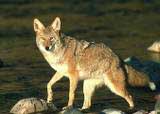 . Eastern Coyote ( Canis latrans ) . Eastern Coyote ( Canis latrans )
This past Winter I had an encounter with the local coyote pack I will never forget. One night, around 3 am, I awoke to the same chorus. I could hear the coyotes moving through the woods skirting my house. They were VERY close. The moon was nearly full and illuminated most of my front yard. I crept out of bed and headed, in darkness, to my living room to retrieve a turkey (diaphragm) call I had on my TV. Having “called in” coyotes before with a predator call, I felt confident I might get a response with some high pitched squeals the call would produce. I knelt beside my bedroom window and did my best impersonation of a dying rabbit (with the mouth call of course:)). I called on and off for about 30 seconds, and then listened. They were pretty close so I wanted to be careful. I heard their footsteps, in the dry leaves, coming in my direction... it was working. The moonlight filtering through a dogwood tree in my front yard provided reasonable visibility. As I remained motionless listening to a coyote trotting in my direction through the leaves, something I didn’t expect happened. A coyote, a different one, appeared out of nowhere! He snuck in from my left, searching for the wounding animal without making a sound. I was shocked and, at the same time, excited. He loped back and forth across my view, a mere 12 feet from my open window. My heart was racing the entire time. After satisfying his curiosity, he eventually disappeared into the darkness. Wow! I felt so blessed to have experienced it. It’s hard to put emotions into words sometimes. For me it wasn’t just the excitement of the moment, but rather the connection I felt to nature that night is something I will always treasure.
Some people fear and even hate coyotes…for what reasons I’m somewhat unclear. Perhaps they’ve lost beloved pets to them…I have too. Or perhaps they fear the unknown. I once read that “Man fears what he doesn’t know, and what man fears he destroys.”
Besides the wolf, the coyote is perhaps one of the most misunderstood animals in North America. Here in the south, they fill a position the Red Wolf once occupied. They serve the important responsibility of checks and balances, a role that we humans may never fully understand. They are numerous, highly adaptable, secretive and difficult to study. For me, the coyote is a blessing. I’m glad they’re here. They embody the very essence of nature… raw, untamed and inspiring. I am grateful for such things. My relationship with the natural world deeply touches my soul. Without it, life would be mundane at best.
Like it or not, the coyote is here to stay. The next time you hear the coyotes howl…howl back!
To Top |
The Realities of Wilderness Survival - Part I
By Richard Cleveland
Wilderness survival skills are unappealing to most and those that think they have the skills to survive, really don’t. A good example is your average outdoorsman. Guys and gals that grow up hunting, fishing, and hiking, in my opinion, have a false sense of security in the woods. Many have had some training via Boy Scouts or the military, but most have had none! They think that because they have a knife, maybe a gun and little gear, they can take care of themselves. Nothing could be further from the truth. Each year hundreds of accomplished outdoorsman get lost or injured, and on occasion die. Even if you’re a bird watcher or a day hiker, going into the woods without real skills is very dangerous indeed. Nature can be quite unforgiving.
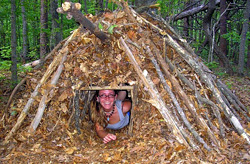
I’ve taught hundreds of ex-military personnel and countless Eagle Scouts over the years. Whether it’s a weekend class or week-long program, their comments are always about the same… “Wow! We didn’t get this kind of training.” You see, most of their training revolves around gear and modern gizmos and gadgets. Their heavily loaded backpacks are their umbilical cord back to society. Take that away from them and they’re in big trouble. Now don’t get me wrong… I love gear too, but honestly I know what to do without it. Do you? Interestingly, most people that get lost in the wilds have gear with them, but lack the knowledge to even build a simple shelter. They often panic, get overheated and succumb to hypothermia, via exposure to the elements. Gear can never replace real training.
I ask my students at every class this question…”By a show of hands, how many of you have been lost or turned around in the woods for even just a few minutes?” Over 95% of students raise their hands. Did you? I did!:)) It happens very quickly and it’s easy to see how people can panic and make bad decisions in a big hurry. The greatest gift you can give yourself in that moment is to, “admit that you’re lost!” Seriously, your mind can be your best friend or your worst enemy in a stressful situation like this. What you do in the first 15 minutes will usually determine your outcome.
Our four basic needs for Survival are food, water, shelter and fire. But what is the most important? What should you focus on first? I teach shelter, water, fire and food…in that order. While people might disagree with me the rule of 3’s speaks for itself. It states…
“We can Survive 3 minutes without oxygen… 3 hours without heat (if we’re cold and wet)… 3 days without water and 3 weeks without food.” Shelter should always be number one! The weather here in the western North Carolina mountains can change in the blink of an eye. A basic formula I teach involves the word S.T.O.P. The S means sit down, the T means think, the O stands for observe (look around), lastly the P means plan…to do what? Build a shelter!! Putting a roof over your head for the night can be quite empowering.
If you were smart enough to tell someone where you were going and what time you’d be home, I recommend staying where you are. You make it much harder for friends to find you when you wander around and trust me… without a compass, you WILL walk in circles eventually. Use your energy wisely. Good clothing is one of your best shelter investments. Cotton is called “The fabric of our lives” but is a deathtrap in the woods. More lost people have died wearing cotton than any other fabric. It wicks water and doesn’t dry fast enough. We’ve all had the experience of being soaking wet and cold. Not a good combination in the Wilderness. There are countless modern synthetic fabrics, too numerous to count them all. I’ve tried many over the years, but I always come back to Wool! Unlike cotton, it doesn’t wick water and is very water resistant. Many complain that wool is too bulky, itchy or heavy for them. Recently, I’ve discovered the wonders of “Smart Wool” (brand name). It’s pricy, but I absolutely Love it! It regulates my body temperature even in warm weather. And, for some reason it doesn’t absorb your body odor. In other words… you won’t stink after a few days. With Spring around the corner, many stores are currently discounting it. Now is the time to buy it!
I’ll continue this dialog in the next several articles...See Part II below. In the meantime, I welcome your thoughts and input.
Richard Cleveland lives in Asheville, NC. He is the founder and director of Earth School. A self-trained Naturalist, fishing and nature guide, he has taught traditional native skills to thousands of people, of all ages. For info about his programs visit www.LoveTheEarth.com
To Top |
The Realities of Wilderness Survival - Part II
By Richard Cleveland
In part I of “The Realities of Wilderness Survival”, I discussed some Wilderness Survival Basics. Shelter, as I stated, is always a major priority. Whether you build a shelter or seek natural protection from the elements depends largely on your situation at hand. Hunkering down in a dry place is obviously a wise choice. Rock-overhangs, large conifers and other natural refuges are a welcome option, though not always available. Lean-to’s as the “survival books” teach are nothing more than wind/water breaks, designed to reflect heat from a nearby fire to keep you protected from the elements. But what if you don’t have or can’t start a fire? What then?
Having the knowledge to build a shelter that will keep you warm without a fire is key to real Survival. Simply… this takes practice, as do all skills. Interestingly, as important as knowing how to properly construct a shelter, it is the least practiced skill. People entrenched in primitive pursuits tend to spend their time making bows, tanning hides and chipping arrowheads (glamour skills), but forget the importance of practicing the art of building various shelters. This is a grave mistake, in my opinion. I’ll discuss and share more ideas on this topic in future blogs, and of course I welcome your input.
Water is second on our Survival list, but obviously quite important. Water is the most powerful element on Earth. Given enough time, water can erode granite. According to science… we are 75 to 80% water. Without water… we,… would simply be dust….:) Food for thought:) I remember as a child, the introduction of “Perrier” spring water from France…we laughed at the concept. Why would anyone pay for water? … after all… everyone knows water is free!! Right? Obviously this simple understanding has changed dramatically. We now, as a society, openly buy water to insure its purity. What I find most disturbing about this fact, is that we have accepted this as normal!! Have we lost our minds?? We now gladly pay for the very thing that enables our very existence? Hmmmm…..
Okay…back to topic… How do we find clean, safe water in the woods? Can we safely drink from the streams? Understanding the hazards is a good place to start. The main hazard we’ve probably heard of is Giardia Lamblia aka…(beaver fever). This is a water-born protozoan parasite that can be quite nasty indeed. Even in the most remote areas of wilderness, officials recommend that hikers boil all unfiltered water for at least 2 – 5 minutes to insure safety. Water quality is paramount to life!
I personally have a Katadyn pocket filter that I trust entirely in the bush, but what do you do without? My rules are such… always follow water to its source whenever possible. In the wilderness, fast moving water is safer to drink, but not an absolute. When in doubt… boil it!! Wiping the dew from grasses in the morning is a great source of clean water. This condensation of evaporated water is pure. A bandana or natural sponge works great for collecting this resource.
In the Spring, wild grape vines can produce a source of clean water. Trees such as maple. birch, hickory and sycamore can provide a temporary source of hydration as well…
I’ll continue this dialog in the next several articles... Part III coming soon. In the meantime, I welcome your thoughts and input.
Richard Cleveland lives in Asheville, NC. He is the founder and director of Earth School. A self-trained Naturalist, fishing and nature guide, he has taught traditional native skills to thousands of people, of all ages. For info about his programs visit www.LoveTheEarth.com
To Top |
**Disclaimer...."We make no claims whatsoever about the validity of the content of these pages of information. We prescribe nothing. It is up to YOU to find the truth for yourself. We accept no responsibility for YOUR actions."
" Take charge of your Health " – Junebug's Flu Remedy !
By June Ellen Bradley ( Junebug :)
Did you know that most of your winter ailments can be handled by YOU with ingredients from your kitchen? Well, you may have to go shopping first; however, it is in fact true that you can be the instrument of your own healing more often than you might think. A friend who tried my homemade brew was astounded that such a simple recipe helped to remedy a chronic sinus infection that always required antibiotics. “First time ever.” She said, that she didn’t need them.
The reason that this remedy works is that, being plant based, there are innumerable constituents, chemically speaking, that make up the brew. When you go get an antibiotic, it is generally one “active ingredient” with a few binders and perhaps a preservative or two. Nature, being the advocate of intricacy that she is, constructs all living things with infinite possibilities for variety genetically mixing things up so that organisms can adapt to and survive the greatest number of situations that may pop up. Therefore, it is no surprise that lots of bacteria have mutated so that they are immune to that “one thing” that we call our antibiotic.
What if we could come up with a broad spectrum healing concoction from our kitchens that would not only have the complexity to stump bacterial mutability, but could nix those pesky viral bugs as well? Now I’m not going to tell you that we can cure everything ourselves and never have a need for antibiotics…that is ridiculous. I am placing before you the option of making your own medicine for the winter time “cold season.”
Here, I am assuming that you are going to be sensible and dress properly for the season, get plenty of rest, exercise and stay hydrated as well. Did I mention eating plenty of fresh food preferably organic and in season? These are habits that create health, y’all know that.
That being said, I’m going to give you the basic recipe for a good home brew that can nip some of these big-time ‘bugs’ in the bud. All of these ingredients should be chopped up well to maximize the surface area, this will ensure that everything will be pulled out by the menstrum. A menstrum is something that extracts “active ingredients” or inactive ones for that matter; I think they’re all important. The good thing about this remedy is that even if you happen to take too much, unless you’re allergic to one of the ingredients ( and be sure to leave that one out ) it really won’t harm you. If you use some form of alcohol for the menstrum, it might make you do stupid things upon over-consumption, believe me...you won’t want to drink this recreationally:)
So back to the plan of chopping things up, what do we chop? Every year I make this up it is different. Sometimes the ingredients I want may be unavailable at the time I go to prepare it. Oh well. It still works. You want to try and have a handful of garlic heads and dried cayenne peppers, a big onion, big ginger root, a horseradish root, a beet, a turnip and a lemon which you chop and put in skin and all. I like to include a handful of rosemary too. From there, we can be creative. Sometimes I add turmeric, burdock, dandelion (whole plants), this year I included seaweeds for the first time. Basil is good to include and I usually put in lots of Lemon balm for its antiviral qualities. The year I added habenero peppers had to be watered down in equal parts! These are all food herbs which mean that you can eat ‘em all day long ( if you could take all that heat ). Sometimes I add all kinds of other things I have in my herb garden too. Thyme is on the level with goldenseal as an anti-infective. In a pinch you can add all of these ingredients into your daily diet to blast out the invaders.
As long as you use common food herbs, you can feel free to be creative. Remember, medicine herbs are those that are to be taken at a specific dose for a specific period of time then discontinued…we’re not talking about using these kinds of herbs even though we’re making medicine. Confusing, I know.
An aside is that this will make you sweat like crazy –we’re not done with the recipe yet –I’m a right brain writer, so you’ll just have to wander along with me here. Now if you are good at being aware of your body and can tell when you are beginning to get that “O no” feeling, jump on the juice. You can get rid of things by striking while the iron is hot ( pun intended ) and sweat it out. Sometimes you can exercise to the point of ‘fever’ –a practice that keeps athletes healthy. For non athletes or the exercise allergic, a good sauna can do wonders.
It definitely gets more difficult to deal with something once it sets up camp and starts producing reinforcements. So the number one advice this season is be aware of your energy levels, if they start to dip…pay attention! A little tickle in the throat or some congestion means action on your part! Don’t just hope it will go away... escort it out the door yourself.
Back to our brew… so now we’ve gotten all the ingredients chopped and we put them into a big (gallon) glass jar. Then we add the menstrum… it can be a nice vodka, or brandy –my two personal favorites. If you have alcohol sensitivities you can use apple cider vinegar. Cover up all the ingredients with the menstrum by at least an inch. Put a lid on it and let it sit –shaking daily for at least 2 weeks –maybe 4. Then you decant it. That means you strain out all the solids, keeping the liquid. Don’t drink it in this form it will be incredibly hot and taste horrible. During the entire process, it is important to be in a loving space because your energy goes into the brew you’re making. Infuse it with love. If you’re upset or angry…don’t touch it that day.
The next step is to make a simple syrup or if you are lazy you can just add equal parts maple syrup and grape juice I collected elderberries and blueberries this year and made my syrup from that for the lycopenes, among other things. You can always add fruit juice to get the taste a little sweeter. It should be hot and sweet tasting, but not so good you’d drink it for fun. Just add enough syrup or sweetener to your taste.
The thing to remember is to cut the liquid you’ve decanted at least in half –or maybe even half again depending on how much you can stand of the taste. It has to taste good enough so you don’t mind taking the initial tablespoon and then following it up with a teaspoon every half hour till you are symptom free.
As you can probably discern from all the ingredients listed in this recipe, it makes quite a bit of cold care concoction… another friend of mine named it, the “can of whoopass” for colds (COWA). You can keep the formula for several years if you want, or you can have enough to make some awesome Christmas gifts for your more open minded and health conscious friends! Health and Blessings everyone! ~Junebug
To Top
Wild Edible Plant Recipes...( more to come soon !)
Sumac Kool-aid ! Sumac berries are very abundant this time of year. Have you ever made Sumac Kool-aid ? The berries of this common plant are rich in vitamin C, and can be made into a delicious drink that is actually good for you ! Here's how you make it...
*** Gather 4-6 heads of red berries (smooth or staghorn sumac are best). Poison sumac has white berries !! don't make that mistake:) Wash your hands thoroughly and fill an open container with about a quart of cold water. With your hands submerged, remove the berries from the woody heads. Quite a bit of red sumac resin will stick to your hands, so remove as much as you can from your hands and add that to the water as well. Let the berries sit in the water for 2 to 4 hours (or longer) and strain into a pitcher. I like to lay some cheesecloth in the strainer to remove the finer particles. AND... Presto !..you have a tart, bright red tangy drink, loaded with vitamin C, that even the kids will enjoy ! I like it just as it is, but you can sweeten it with honey or real maple syrup if you desire. Don't use processed white sugar...YUK ! Kinda defeats the purpose...ya know ?
|
Lambs Quarters – "Wild Garden Gem!"
By Stacey Phillips
After the early Summer's heat has chased away many of our tender Spring greens, my attention turns to one of my favorite wild edibles- Lamb's Quarters, Chenopodium album. It loves open areas with full sun, and It grows prolifically in rich farm and garden soil. It is often one of the most common "weeds" we pull from our domestic vegetable gardens. As with our dear friend the Dandelion, the best way to beat this persistent weedy plant is to eat it! The tender young leaves are delicious in salads, and the older leaves, stripped from their stalks, make a wonderful cooked green with all of the taste and nutrition of their botanical cousin spinach and none of the growing effort.
Speaking of nutrition, cooked Lamb's Quarter greens contain more vitamin C per half-cup serving than spinach, almost as much vitamin A as carrots, and over 300mg of calcium (spinach has only 93mg). They are also rich in B vitamins, especially riboflavin and folic acid. The greens are more than four percent protein, and the edible seeds contain 19.6 grams of protein per half-cup, which is more than double that of its domestic sibling quinoa (Chenopodium quinoa), widely known in the health-food world as a protein-rich grain. Not too shabby for a weed.
Lamb's Quarters produces abundant seeds in the late summer/early fall, which can be either meticulously winnowed if you're feeling ambitious, or they can be dried and stored with the chaff and all, which is how I generally use them. I like to add the seeds to soups or pasta sauce at the very beginning of cooking, as they take a bit longer to soften than most grains. If you cook them less, they will add a nice crunch to dishes that isn't bad, either. Wild-foods cooking isn't an exact science, so use your imagination, experiment, and most importantly, have fun with your food!
The Wonderful Wild Plants of Summer!
By Stacey Phillips
Now that we're past the Solstice, the evening temperatures are steadily warm and the wonderful wild plants of Summer have replaced those we've been enjoying all Spring. As I think of just the plants I've been in contact with today, it amazes me how much food and medicine is readily available right outside my front door.
This morning, as I was tending to the barely-controlled chaos I refer to as my garden, I noticed the tomatoes were getting more than a little crowded by lamb's quarters and broad-leafed plantain. I reluctantly pulled out some of the plants, but I made sure to set a few aside for dinner. I'm envisioning lamb's quarter leaves and plantain seeds cooked into rice, perhaps with a healthy dose of garlic.
After my weed harvesting, I made sure to pay a quick visit to my favorite St. John's Wort plant. I have been eagerly awaiting its blooms so that I can make a tincture from it at the best possible time, along with a few more plants nearby. Even after harvesting the top third or so of the plant last year, it flowered a surprising second time in late summer and this year has nearly tripled in size. For me, this is one more example of the amazing resilience of wild plants. If we truly are what we eat (or ingest as medicine), I would rather make myself out of strong, adaptable wild plants than from the domestics that require so much care from us simply to survive until harvest time. That's not to say I don't eat domestic vegetables at all, but I do make an effort to include as much of the wild as possible in my diet. The tiny green flower buds are beginning to show a bit of sunny yellow. Just a few more days…
This afternoon I took a stroll in a nearby field, and I gathered Red Clover flowers to dry for tea. Why would I do such a thing, you ask? Red clover flower tea is an alterative, a blood cleanser, it helps balance hormones in both women and men, and it has been studied extensively for its cancer-preventive properties. On top of all that, it makes a very tasty tea, especially if you add a little peppermint. Red clover is a bit fussy to dry, however, and can be harmful if allowed to mold, so I always harvest vibrant-looking flowers with no brown on them during dry weather and make sure to dry them promptly in a dehydrator. My timing was perfect today, as it hasn't rained for several days, and I made it back to the house just before a welcomed afternoon shower began.
Once the skies cleared again, I stepped outside to harvest one more item for dinner. Daylily flowers are in bloom in great abundance right now, so I gathered several to be breaded and fried like zucchini blossoms. Be sure to only use the wild Daylily variety that is orange in color, since the pretty garden cultivars could potentially vary in chemistry and have no history of food use.
On the way back to the house, I couldn't resist picking and tasting a few black raspberries. At first glance, they may look like blackberries, but one easy way to tell them apart is the stem. While blackberries have a small stem attached when they are picked, black raspberries will have a small indentation on top because the stem stays on the plant. They are ripe and plentiful in the nearby hills, so within the next few days, I will likely gather many more to freeze for smoothies and to preserve in apple cider vinegar. The resulting vinegar/berry mix can be combined with olive oil to make an antioxidant-packed and nearly instant raspberry vinaigrette for salads. Yum!
The dinner resulting from all this outdoor frolicking was fantastic. The Lamb's Quarter greens and plantain seeds added both nutrition and flavor to the rice, the Daylily fritters were out of this world, and some domestic, but lovely butter-dripping sweet potatoes rounded out the ensemble.
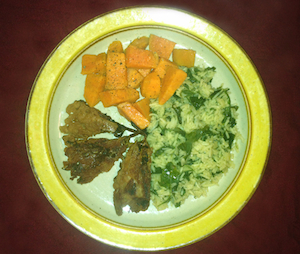
If any of you have any plant-related questions, please feel free to ask! My email address is staceyphillips@lovetheearth.com, and I will be happy to help if I can.
“Rites of passage – Empowerment for the Teenage Soul”
By Richard Cleveland
It’s been many moons since I was a teenager. I remember it was an important part of my life… aside from the raging hormones and awkward first dates. It was a time when being acknowledged as an adult was very important to me, not just because of my age, but also because of my ideas and opinions. I’m sure most of you can relate.
I did my share of dumb things, just like the rest of us, testing boundaries and seeking attention. The world revolved around me and honestly I didn’t really care about kids that were younger than me, I focused more on trying to be like the cool older kids who seemingly had everything I wanted… popularity, a nice car and freedom to do just about whatever they pleased.
I don’t see much difference in how our teenagers are thrust into the world today, with the exception of the vast array of electronic distractions they’re constantly bombarded with. It’s hard to find a teenager not glued to their “Smartphones. ”Modern technology has certainly had its impact on our children. Those of you who are parents, I’m sure you can relate.
I’ve always been a big History buff and have studied traditional cultures, like the Native Americans extensively. It’s seems that all traditional cultures have some sort of “Rites of Passage” for their teenagers to honor their transition into adulthood… something glaringly missing in our society. Our public school system separates our teens based on one-year increments. High School Seniors look down on the Juniors, who pick on the Sophomores who haze the Freshman class and so on.
By contrast, Teens in Native cultures were given the responsibility of being role models for the younger children… to mentor and teach them skills. This empowerment made them feel important and necessary to the well-being of the community… which they were. This mentoring I believe gave teens a strong moral compass, for they knew that their actions could greatly affect the younger children that looked up to them.
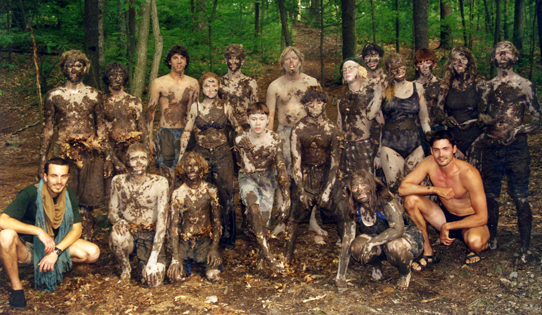
I believe that it’s important to restore such traditions and teachings. Teenagers are our future leaders and they have ideas of their own. We need to listen to them, empower them with responsibility and encourage them to be role models and mentors to younger members of their communities. I’ve mentored teenagers for over 20 years now. Seeing them become responsible, caring adults has been one of the most rewarding things I’ve ever experienced. I’ve witnessed first-hand that Nature immersion and rites of passage were vital experiences that helped them on their journeys to adulthood… ultimately, for the benefit of all.
To Top |
Chickweed and Garlic Mustard - A Perfect Pair
By Stacey Phillips
In the midst of the season of presents, eggnog, snowflakes, and festive lights, the last thing on most of our minds is foraging. The ground becomes frosty, the air chilled, and it often feels nicer to be indoors. However, the unseasonably warm weather we’ve been experiencing has allowed two of our favorite fall greens to linger a bit longer, and Richard and I were able to spend a sunny December afternoon happily collecting chickweed and garlic mustard.
Chickweed (Stellaria media) has to be one of my absolute favorite plants. I can’t say that it’s the strongest medicine in the plant kingdom, or even the most showy flower in the wilderness. In fact, I can’t really explain it in those terms at all. It just makes me happy when I see it. It is soft and gentle, diminutive and understated, yet very powerful. Not only is it a delicious, mild salad green, but it is also a healer and a potent anti-inflammatory. It is considered to be a “cooling” plant, and it is used topically to soothe and heal rashes and skin irritations of all kinds. It is also used as a poultice to draw out eye infections like pinkeye. Internally, it is loaded with saponins that increase cellular permeability and gently help the body to dissolve and release toxins. Perhaps this is why it is often regarded as a weight-loss herb. Nutritionally, chickweed is a powerhouse chock-full of minerals such as calcium, magnesium, manganese, zinc, iron, phosphorus, and potassium. It also contains vitamins A, C, and folic acid. It is best eaten raw, as it is so water-rich that it reduces to almost nothing when cooked. The tender tops make a wonderful base for a salad, and are mild enough to balance the stronger flavors of bitter greens.
Chickweed likes cool weather and indirect sun, so look for it during the spring and fall (or early winter!) in shade or partial shade. It grows low to the ground, often in large, dense mats where you can sit down and gather a generous amount in a short time. For identification and beauty, chickweed has an unusual little white flower that has 5 petals that are so deeply cleft that they look like 10 petals at first glance. Another nifty identifier may require either excellent eyesight or a magnifying lens: a single line of hairs on the stem that spirals upward, making a 90 degree turn at each leaf axil. Such graceful design.
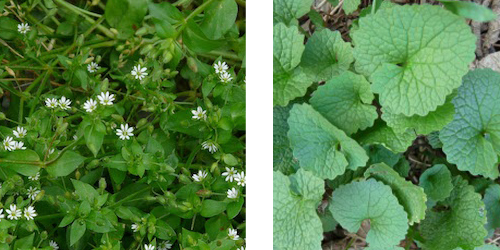
Our other quarry for the afternoon was the infamous garlic mustard (Alliaria petiolata). This rather invasive plant often displaces native woodland wildflowers and for this reason is considered a nuisance and disliked by many. The good news is that it is incredibly nutritious and quite tasty. It combines the sharp flavor of mustard greens with the pungent flavor of garlic. This is one plant that you needn’t worry about over-harvesting during your foraging adventures. Go ahead and gather this one with abandon, and enjoy the benefits. This nutritious “weed” contains vitamins A, C, E, and some of the B vitamins. It is also rich in potassium, magnesium, calcium, selenium, copper, iron and manganese. Young, tender leaves are excellent raw in salads, and the more mature leaves make a tasty cooked green.
Garlic mustard grows a tall stalk in late Spring with 4-petaled white flowers, but in early Spring and again in Autumn, you’ll only see it growing low to the ground. At the edges of woods in dappled shade is where you will most likely find it. The leaves are a rounded heart-shape, scalloped, deeply veined, and will smell like garlic when crushed. Some potential similar-looking plants are ground ivy (an icky-tasting medicinal plant) and golden ragwort (mildly toxic), but these will not have a garlic smell. Remember to always positively identify anything you intend to eat.
The powerful flavor of garlic mustard is perfectly balanced by the mildness of chickweed in one of my favorite recipes: wild pesto! Here is how I make it…
Chickweed and Garlic Mustard Pesto
2 cups chickweed, coarsely chopped
1 cup garlic mustard leaves, coarsely chopped
1/2 cup olive oil
1/4 cup pine nuts or sunflower seeds (if you’re lucky enough to have some leached acorn pieces lying around, these are amazing as well)
1/2 teaspoon sea salt
Add all ingredients to a food processor or high-speed blender and process until smooth. This makes an excellent dip, spread, or pasta sauce (with a bit of extra olive oil) and is loaded with wild nutrition! It is a great way to make eating your green leafies a little more exciting. Note: Any wild greens you like can be used in this recipe. If I’m just using chickweed, or using any other green than garlic mustard, I will add a clove of garlic to this recipe. Enjoy!
To Top
The Winter Solstice - A time for exploration and fun!
By Richard Cleveland
The beginning of Winter is here and I'm excited about the outdoor opportunities it offers. The Moon will be full on Saturday December 22nd, adding light and lunar magic to this annual event. After a beautiful Fall I welcome the changing weather. With the leaves off the trees, it's a great time to explore your favorite patch of woods. Animal sign is easy to interpret, as their trails and runs are very visible this time of year. It's truly a great opportunity to learn about your woodland neighbors.
Much of the East coast experienced a poor crop of Acorns this year. I could hardly find any in my woods and I'm sure our local squirrel and deer population have been affected by the lack of food. I read recently that some scientists fear the shortage may affect squirrel and deer populations as a result. Indeed, I have noticed that the population of squirrels on my property seems to be less now than last year, and I've seen a few that were uncommonly small. Since acorn production runs in cycles though, it's not that uncommon to have lean year after a year of abundance. Perhaps next year will balance things out. We did however experience a good year for Black Walnut and Hickory nuts. Both are absolutely delicious, though it is a bit tedious to extract the nutmeats. I find it well worth my effort .
Numerous species of migrating birds have been showing up around the area lately. A pair of Ruby-Crowned Kinglets and a female Yellow-Bellied Sap Sucker have been hanging around the house. They'll spend the Winter here in the South, then head back North in the Spring and early Summer. Our year-round residents like Tufted Titmice, Cardinals and Chickadee's seem at home in this wintry mix. Carolina Wrens, Blue jays and Crows are still common sights and Junco's are beginning to arrive for the Winter months.

Most of our Wild Edible plants have disappeared, but chickweed, dandelion greens and sheep sorrel are still available. All are a welcome addition to soups and salads. Some violet and plantain leaves can still be found also, but will soon disappear. And, don't forget about our wild garlic! Wild garlic is still plentiful and can jazz up any dish. Rose hips are in abundance too and can be collected for tea, and made into a rich syrup. They're high in vitamin C and can be used in many ways. I love making rosehip honey. It's easy, preserves the vitamin C and tastes wonderful. You can even use it to sooth sore throats! Persimmon trees shouldn't be overlooked either. Some trees are still carrying some fruit. Get them while you can...the ripe fruits are pure heaven.
Bundle up the family this weekend a go for a nice hike. There's much to experience in Nature this Winter. Go explore it together! Is there a better way to spend time with the people you Love?... "Happy Holidays Everyone!"
In Wildness ~ Richard
To Top |
|